Istanbul. Love of the continents.
Striking images of the city, a bridge between East and West.

Crossing cultures and continents
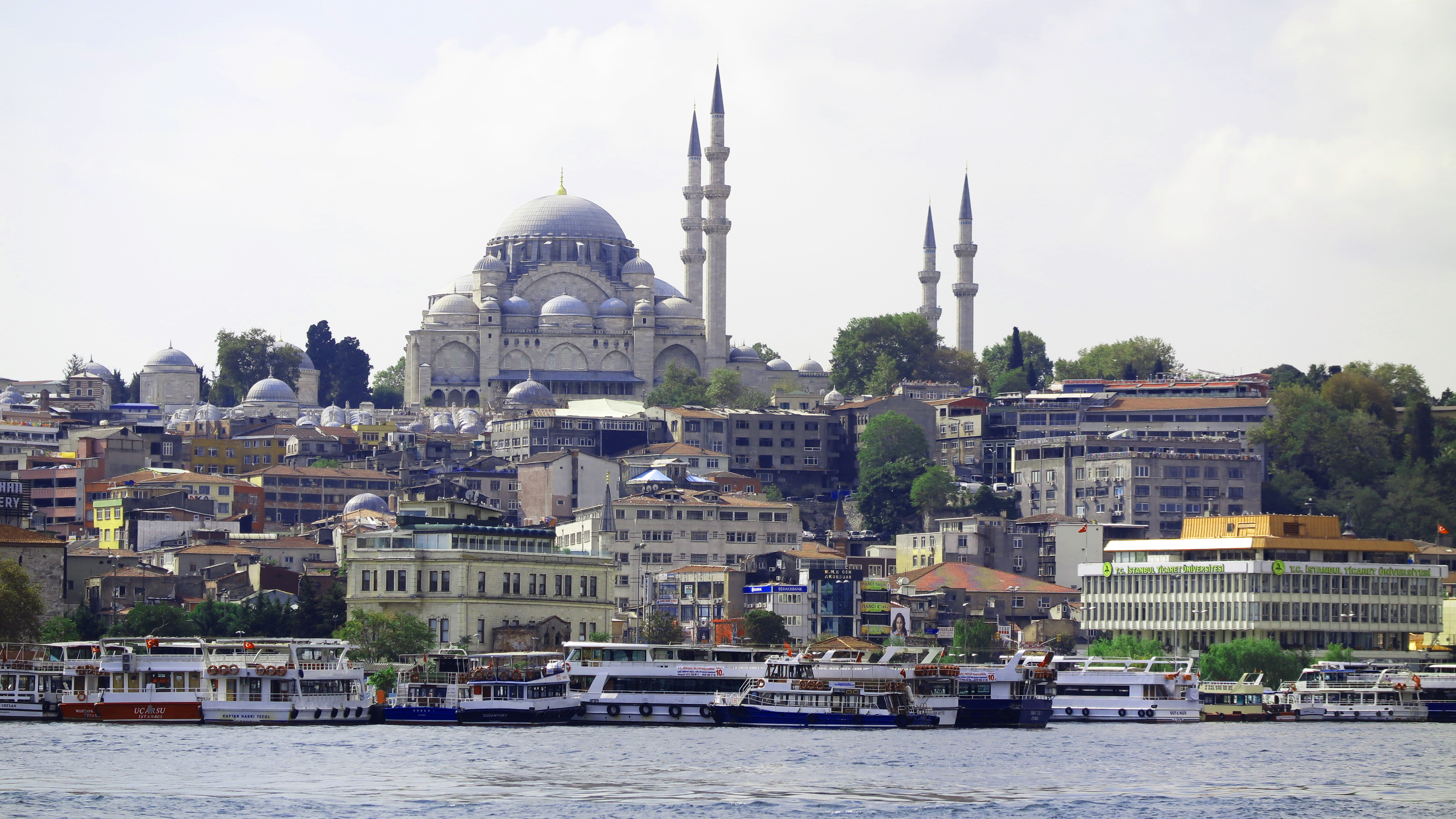


Thanks to its strategic location on a major international shipping route and on historic overland trade routes — including the famed Silk Road — Istanbul has long been at the center of multiple cultures.
When Emperor Constantine embraced Christianity, he established the capital of the Byzantine Empire (an offshoot of Rome) here in 330CE. The city was conquered by the Ottoman Empire in 1453 and has been predominantly Muslim ever since. These influences, along with goods and travelers from ancient Greece, Rome and Asia are seen throughout the city's UNESCO-listed historic center.
Take a peek at what you could experience in Istanbul.
Striking images of the city, a bridge between East and West.
As the historic capital of three great empires—Roman, Byzantine and Ottoman—and as the only city in the world that straddles two continents—Europe and Asia—the art in this Turkish city reflects its position as an ancient and modern crossroads.
In Ottoman Istanbul the great engineer-architect Mimar Sinan builds the light-flooded Suleymaniye mosque to surpass the greatest Christian structure of all time, Hagia Sophia.
Art historians Elizabeth Macaulay-Lewis and Steven Zucker offer an excellent introduction to the architect Sinan's most impressive mosque, a standout on Istanbul's distinctive skyline.
In Istanbul, he remains a central figure: Süleyman the Magnificent (1494-1566), the sultan who reigned for 46 years, expanding the empire and sponsoring many of the city's greatest structures, designed a built by his architect-par-excellence, Sinan. In this BBC The Forum podcast, experts weigh in on his enduring legacy.
Written by one of the country's foremost authors, this novel shines light on the violent Turkish-Armenian conflict by exploring two families who struggle to forge a friendship despite what has occurred. By Elif Shafak.
The city with three names—Byzantium, Constantinople, Istanbul—serves as a gateway between the East and West. For much of its history it was known simply as The City, but, as historian Bettany Hughes reveals, Istanbul is not just a city, but a story. Also available as an audiobook. By Bettany Hughes.
In this fiendishly devious mystery crafted by Turkey's Nobel Prize winner, the 16th-century Ottoman sultan commissions a cadre of the most acclaimed artists in the land to create a great book celebrating the glories of his realm. However, one of the critical miniaturists disappears without a trace before the project is complete. Also available as an audiobook. By Orhan Pamuk.
.jpg)
Contact me to discuss your journey!
We use cookies to improve your experience. Learn More