An Aurora Chaser’s Guide To Seeing Norway’s Northern Lights
It's on everyone's bucket list for a reason. And Tom Kerss explains the science and the emotions behind it.
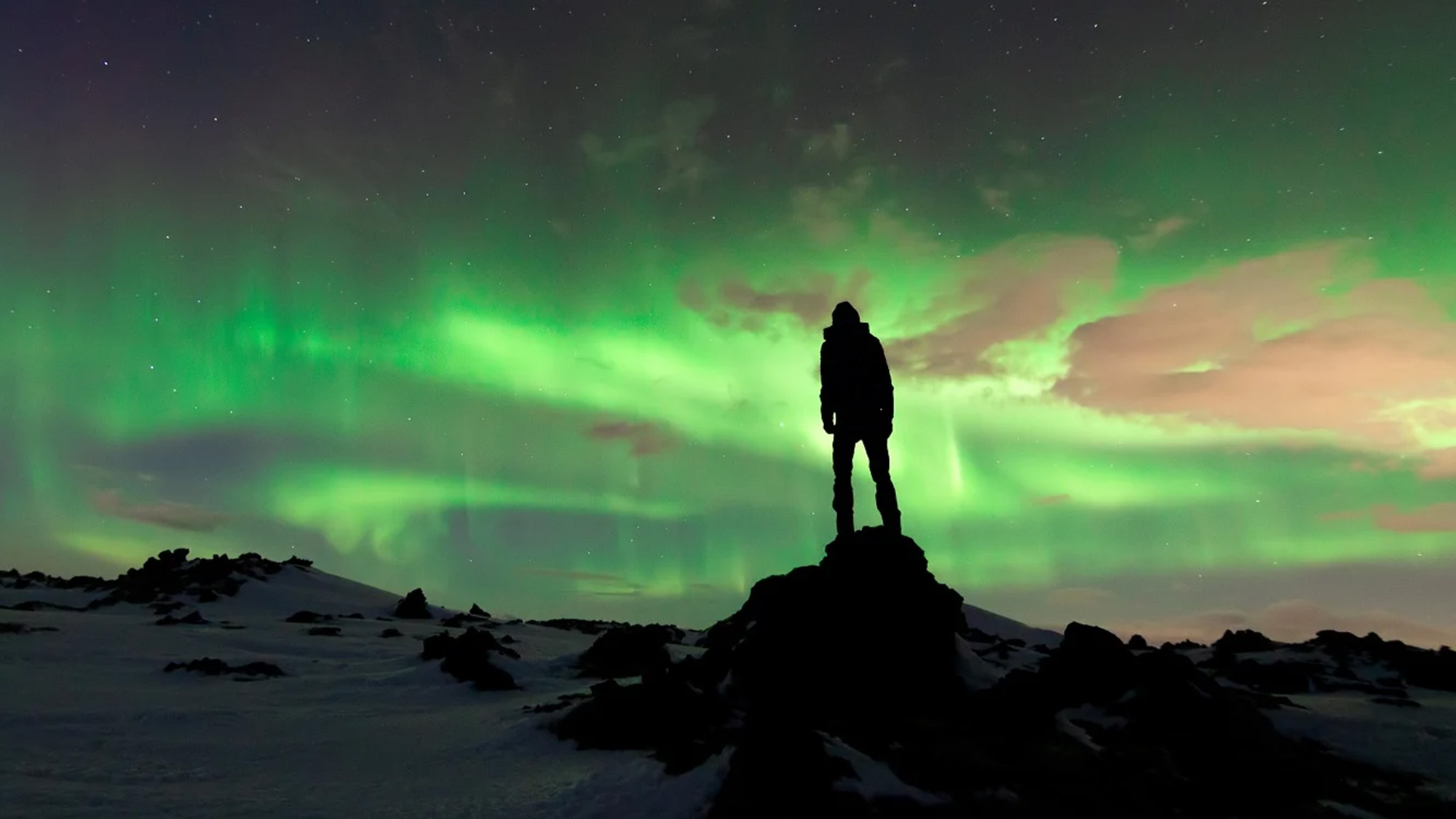
“It’s like real magic happening in front of your eyes!” Astronomer Tom Kerss explains why he can’t get enough of the Northern Lights in Norway.


I'm excited to recommend booking a Hurtigruten cruise now to witness the Northern Lights in Norway. Astronomer Tom Kerss is the Chief Aurora Chaser for Norwegian coastal cruise company Hurtigruten. Below, he shares his insights into the incredible natural phenomenon.
It's on everyone's bucket list for a reason. And Tom Kerss explains the science and the emotions behind it.
I was probably about five years old. It was when we lived near Lossiemouth, on the northeast coast of Scotland, in the early 1990s. If you stand on the beach there, you can sometimes see Northern Lights displays in winter, but nothing like what you get in Norway with ribbons of light flowing overhead.
Being so young at the time, I only have vague memories of seeing that glow on the horizon. But I do remember asking my parents about it. My dad said it was the Northern Lights and I couldn't stop thinking about them. It was one of the experiences that first got me into space and astronomy.
Photos and video don't do justice to it. It's like watching an eclipse on the television. It’s muted. Plain. When you watch an eclipse in real life, you understand why people would get on their knees and pray. Seeing the aurora in person is like witnessing the birth of something supernatural. You feel it in your soul. That human and humbling sensation of feeling small in a world of absolute wonder.
I have two! The first is on my own. I jump in the car and drive out past where the streetlights stop to somewhere so wild that I don't have a sense of any kind of civilization around. I want to connect with the ancientness of the ground and the sky. I’m seeking the immutability of nature, that knowing that the ground beneath my feet is billions of years old, that the sky above is billions of years old, but then seeing the aurora moving in real time. It’s that contrast of a dynamic display over an ancient landscape or skyscape.
The other experience I love is watching the reactions of people who've never seen the Northern Lights before. When the first bright features start to appear, the excitement that people have is soul filling. It's palpable. Some people go silent, and others say… everything! Enjoying other people's reactions has become a uniquely wonderful experience for me.
I’m lucky that I can have it both ways!
We stand to learn a lot about ourselves by learning about the universe. We're not disconnected from the universe. It's not somewhere ‘out there’. We are in it, and it is in us, in the sense that we are made of bits of the universe; we carry bits of stars inside us.
I’m a scientist and science is an act of storytelling, with the stories anchored in things like experiment and observation. How we share ideas and make the world the way we want it to be relies upon storytelling. Before there were any written records, our ancestors inked stories in starlight and placed them in the sky where nobody can ruin them.
Having a connection to the universe gives us a portal to our own ancestry and our shared history. The Zodiac is a good example. It’s a tapestry of stories containing characters that represent archetypes and things that are of shared importance. Virgo holds an ear of wheat because she's the goddess of wheat and the harvest. Wheat was the first crop to be cultivated, allowing humans to go from being nomadic to settling down. It was the birth of civilization and of philosophy.
So, in a far-out, hand-wavy kind of way, the night sky is a way to connect across time with our shared humanity, and it allows us to connect deeply with ourselves in terms of our own deep time ancestry, before evolution on Earth, before the formation of the Earth, back to the first stars, back to the Big Bang. It gives us a hugely expansive perspective. That's why I want people to make it a part of their lives.
That's easy! The aurora offers something that nothing else in the sky or I think on Earth offers, and that is a promise that the best display of my life is yet to come. I don't know when it's going to be, but I do know that I don't want to miss it.
The night skies are a fabulous thing to spend your time observing, but the sky and constellations don't change very much. However, the Northern Lights are unique every single time. You'll never ever see the same display twice and indeed, no one will ever see the display that you saw.
For me, it's like going to see a unicorn. If you knew it was there, you would want to go and see it. You'd be compelled to because it's like real magic happening in front of your eyes.
That's what compels people to become addicted to aurora chasing. Everybody I know who's seen the Northern Lights says it’s a memory of a lifetime. And that’s even if they've seen what I would consider a fairly average or below average display. For a lot of people, that's enough. They feel satisfied. But 10% of people become horribly addicted. And, like me, they keep coming back.
See the Northern Lights or go again for FREE!
For those who have their heart set on witnessing the swirling glow of the aurora borealis, Hurtigruten make a promise no one can match.
Sail the Norwegian coast during the auroral season between September 20 and March 31 on a voyage of 11 days or more. If the Northern Lights do not occur within sight of the ship during your voyage, we will give you a 6-day southbound or 7-day northbound Coastal Express voyage FREE OF CHARGE.
The aurora borealis has danced across northern skies since the dawn of our planet. Dinosaurs, woolly mammoths, and Vikings all walked beneath it, just as we do today. It is a constant of our world. But what creates this awe-inspiring phenomenon?
Did you know that we Norwegians named the Northern Lights? It’s just one of the illuminating (pun intended!) insights made by our Chief Aurora Chaser, Tom Kerss, in this video about why Norway is such a fantastic place to see the Northern Lights.
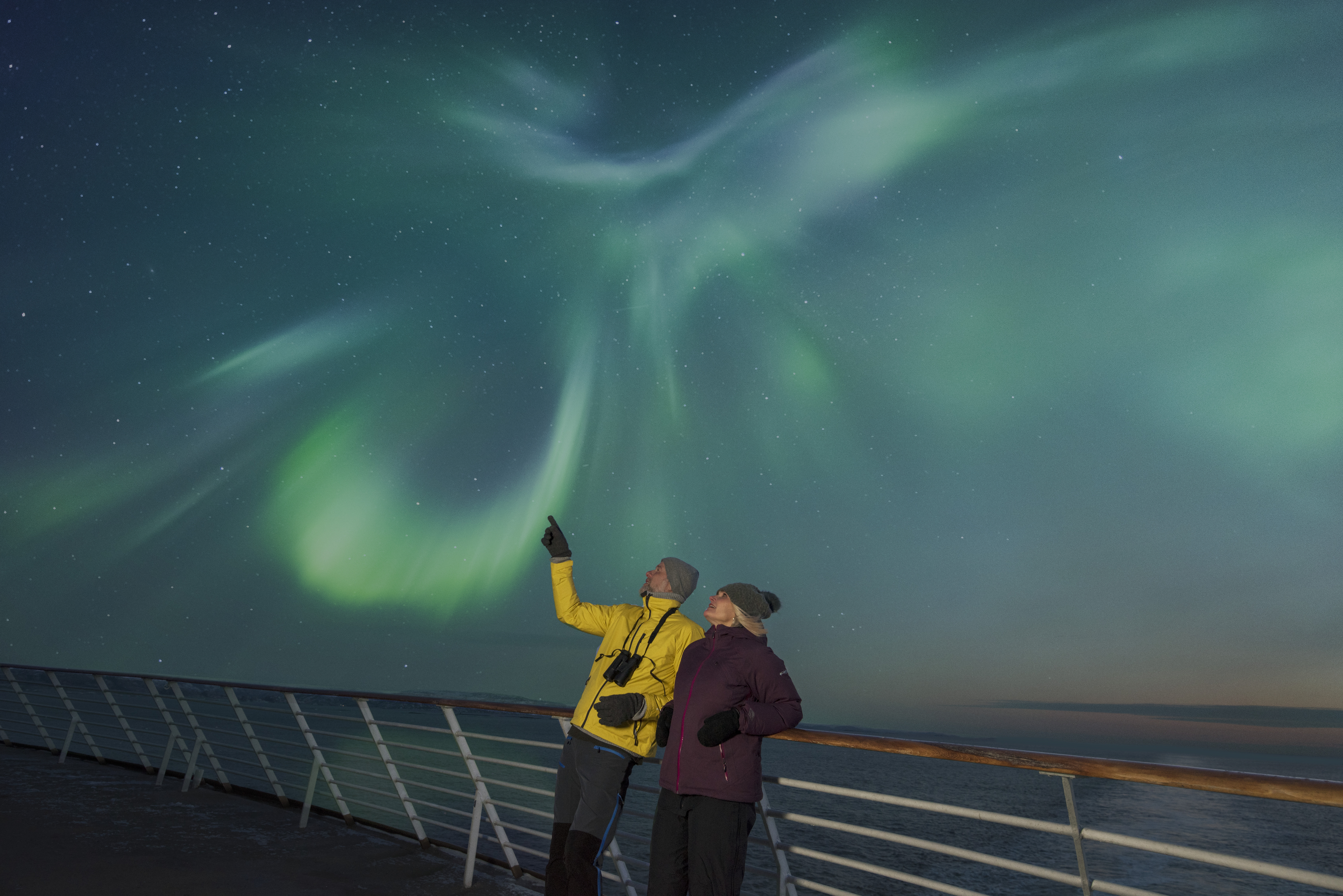
Book your Northern Lights adventure today!
We use cookies to improve your experience. Learn More