Namibian Nights
Amazing nighttime timelapse shots of two of the country's most iconic trees: the fairytale-like quiver trees and the eerie, dead camelthorn trees in Deadvlei.

We've crafted this content experience to boost your marketing and drive conversion. It's easy to get started—simply enter your email!
By entering your email address, you agree to the terms of service and privacy policy
Nature and Heritage Revealed
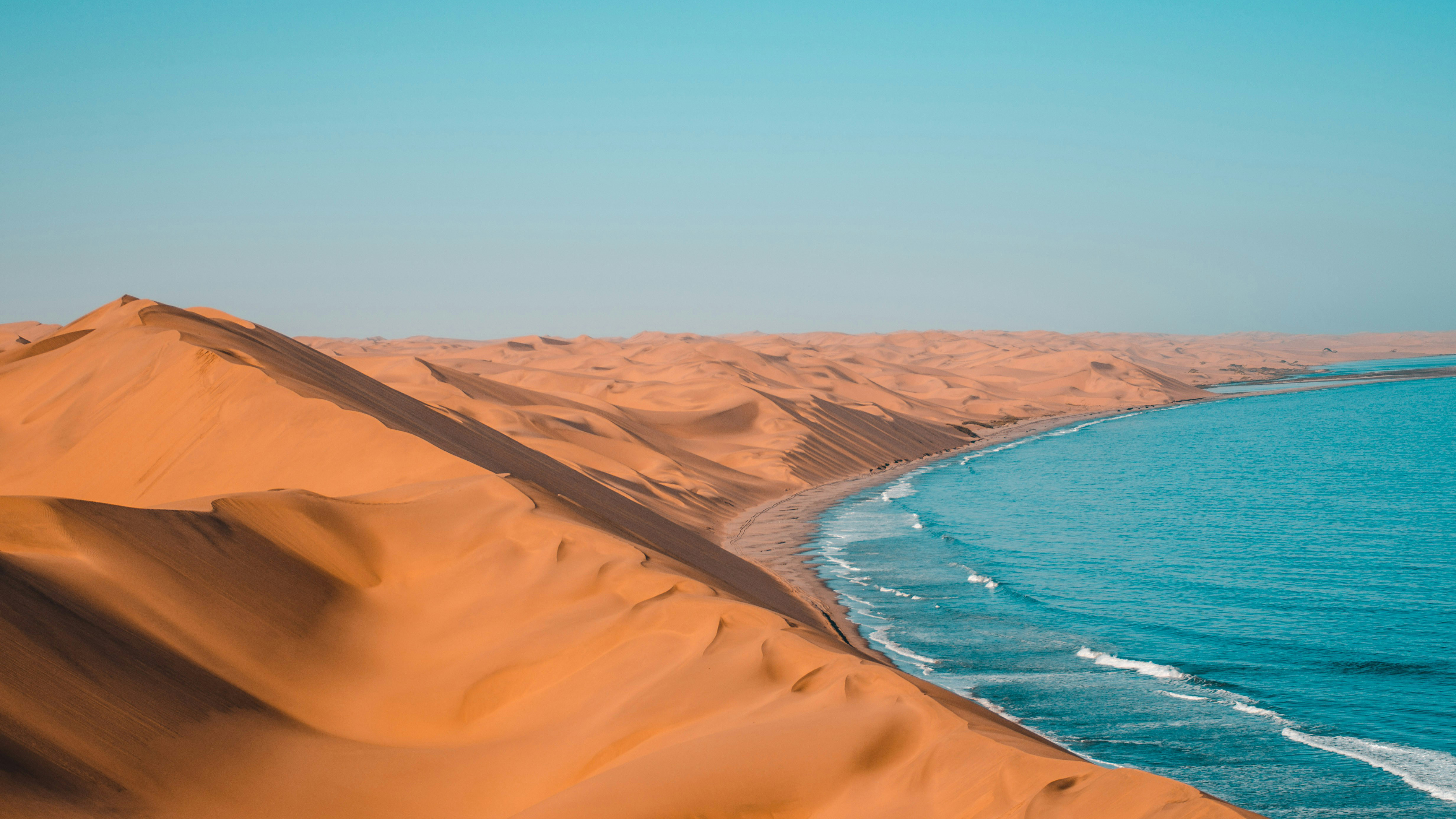
Nature and Heritage Revealed

Namibia feels almost otherworldly. Towering dunes rise from the desert floor, windswept coastlines stretch toward the horizon, and wildlife thrives in some of the planet's most unforgiving environments. Beneath a dazzling canopy of stars, you can discover a land shaped not just by natural wonders but also by a history as captivating as the scenery itself. Today, pioneering conservation efforts help protect Namibia's remarkable wildlife and wild places, preserving the sense of wonder that makes this destination so extraordinary.
Take a look at the stories that make Namibia so remarkable, and let me know if it inspires you to experience this remarkable landscape for yourself.
Amazing nighttime timelapse shots of two of the country's most iconic trees: the fairytale-like quiver trees and the eerie, dead camelthorn trees in Deadvlei.
Take a helicopter ride northward along Namibia's haunting Skeleton Coast to see one of the few creatures that can survive in this harsh environment: Cape fur seals.
Southern Africa's Namib is dominated by two features: sand and wind. Both are constantly shifting and changing, and so too are the sounds they produce. Beginning with a few solo notes from a group of birds (including sparrow doves and finches) before the first light of day and ending with the sounds of the wind in the darkness of the night, wildlife sound recordist Chris Watson presents a journey in sound from dawn to dusk in the enchanting desert.
Learn how brown hyenas, also known as strandwolves, are being protected from hunters along Namibia’s Skeleton Coast. Inland, farmers are working together to protect their crops without harming large wildlife, including elephants and lions.
One of Namibia's quintessential wildlife. A bull kudu towers above other antelope such as sable, gemsbok, and waterbuck at a watering hole. It is easy to tell a male greater kudu by its symmetrical spiraled horns that can grow up to six feet.
Namibia stands out for its cutting-edge approach to protecting wildlife. Author Rick Bass talks about how former poachers have been enlisted to protect the animals they once killed.
In 1904 the Herero people of South West Africa made their final stand against German colonial troops with their backs against the slopes of Waterberg mountain in today’s Namibia. The battle marked the beginning of what has been called the first genocide of the 20th century as tens of thousands were killed, driven into the desert to die and thousands more held in concentration camps.

Framed by scenes of Namibia's formal independence as a newly formed African country in 1990, the film centers on a love affair between a Black maid and a White Afrikaner Police officer in 1963, after the uprising in Old Location—an area segregated for black residents of Windhoek.
In March 1990, Namibia—formerly the South African colony of South West Africa, and subject to apartheid—became independent. In this BBC Witness podcast, hear the story from Andimba Toivo ya Toivo, one of the founders of liberation group SWAPO, the South West African People's Organisation.
Let's make plans for your Namibian adventure!