Make this content experience your own

We've crafted this content experience to boost your marketing and drive conversion. It's easy to get started—simply enter your email!

By entering your email address, you agree to the terms of service and privacy policy

The Amazon Awaits

Vibrant beauty and culture

Your Name
+1 212 555 1212

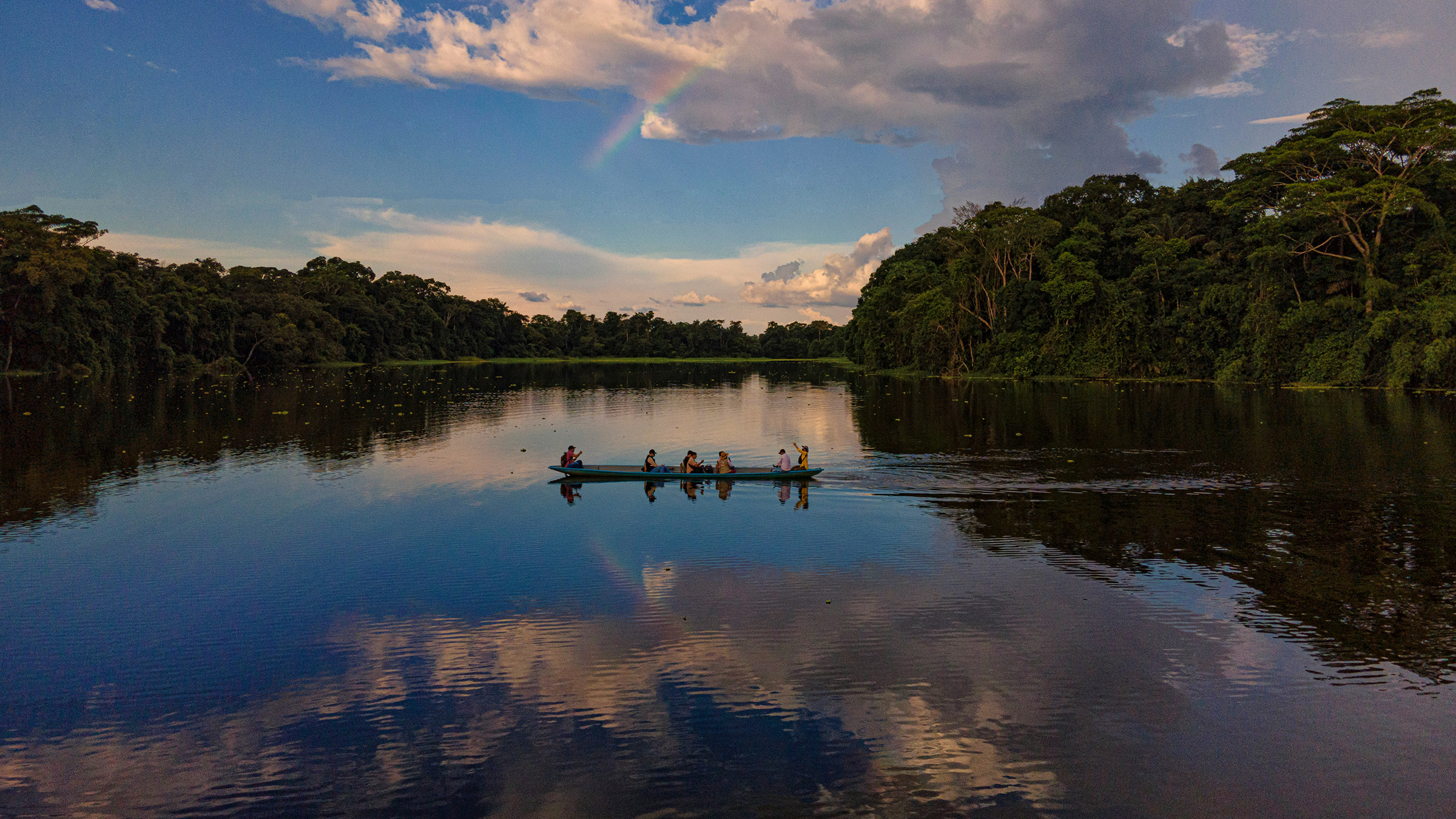
The world's largest rainforest covers more than a third of South America in its lush, green wilderness. As one of the most biodiverse regions in the world, it teems with plants, animals and insects, many of which are found nowhere else in the world.

For centuries, Indigenous tribes have preserved their traditions by living in deep connection to the forest's rhythms.

Whether you're looking for incredible natural beauty or unique cultural encounters, The Amazon offers discoveries like nowhere else.

The largest river on Earth is actually in the sky

Trees transpire (release) excess water through their leaves as vapor. In the Amazon rainforest, the collective release of vapor creates a “flying river” that contains more water than the Amazon River’s daily output into the ocean. This TED-Ed animation explores how this crucial system keeps the rainforest alive.

How the “lost cities” of the Amazon were finally found

The Amazon has always been one of the most mysterious places on earth. Until recently. Beginning in the late 20th century, archaeologists began looking more closely at the forest floor. After mapping them, they could see that these were the markings of large settlements; walls, moats, plazas, and roads that connected even more settlements. And they were all over the Amazon.

The Brazilian Amazon

Ancient civilizations can show us how to protect the Amazon rainforest

For centuries, historians and scholars believed the Amazon rainforest was a pristine and untouched forest, a wild jungle that no man could tame. Research now shows that millions of people once lived in the Amazon and they transformed it to suit their daily needs. Quartz News follows archeologists into Brazil's Tapajós National Forest (in the state of Pará) to learn how these ancient civilizations thrived without destroying the environment.

Bernie Krause | Listen to the Amazon

"In the forest, we never easily spot the animals, we notice them by the tracks they leave, or by catching a glimpse of them. Above all, we hear them. Soundscape ecologist Bernie Krause’s work gives us access to this thousand-year-old—yet still contemporary—experience, which is that of the forest hunters." Delve into the sounds of the Amazon rainforest: a sound immersion (recorded nearby Brazil's Manaus).

The Peruvian Amazon

Legends of the Peruvian Amazon

This short film from the World Wildlife Fund introduces the rich biodiversity of the rainforest through the legends of the tribes which live there.

Ayahuasca: Fear and Healing in the Amazon

Growing numbers of tourists are travelling to the Peruvian Amazon to drink ayahuasca, a traditional plant medicine said to bring about a higher state of consciousness. Foreigners come looking for spiritual enlightenment or help with mental health problems like trauma, depression, and addiction. But not everyone is happy about Peru’s booming tourism industry.

The Ecuadorian Amazon

The ancient civilisation that harnessed the power of chocolate

Contrary to popular belief, chocolate was not first enjoyed by the Europeans, nor by the ancient Mayans. A team of scientists discovered cacao remains in the Ecuadorian Amazon dating back to 5,500 years ago belonging to the Mayo Chinchipe Marañon people. And Ecuador remains the world's biggest producer of premium cacao.

The Oral Heritage and Cultural Manifestations of the Zápara People

The Zápara—an indigenous people of the Amazon rainforest along the border of Ecuador and Peru—have developed in what is one of the most biodiverse areas in the world and are the last representatives of an ethno-linguistic group that included many other populations before the Spanish conquest. This short film from UNESCO World Heritage offers a valuable introduciton.